
Emergency Electrician vs Regular Electrician: What's the Difference and When Do You Need One?
When something goes wrong with your electrics, one of the first questions that comes to mind is: how urgent is this? Do you need someone out tonight, or can it wait until next week? The answer isn't always obvious — and getting it wrong could be costly, or worse, dangerous.
In this guide, we'll walk you through the difference between an emergency electrician and a regular electrician, the situations that call for each, and what you can expect to pay. Whether you're facing a sudden power cut at midnight or thinking about upgrading your consumer unit, we've got you covered.
What Is an Emergency Electrician?
An emergency electrician is a fully qualified professional available 24 hours a day, 7 days a week — including weekends and bank holidays. Their sole focus is responding quickly to electrical faults that pose an immediate risk to your safety or property. They're trained to work under pressure, arrive with the specialist tools needed to diagnose problems fast, and restore safety as efficiently as possible.
The key word here is immediate. If there's a fire risk, a risk of electrocution, or a complete loss of power that can't wait, an emergency electrician is who you call.
At Emergency Hero, 87% of our emergency call-outs are attended within 90 minutes. We connect you with vetted, local electricians who can be at your door fast — day or night.
What Is a Regular (Routine) Electrician?
A regular electrician handles planned, non-urgent electrical work during standard business hours. This might be installing new sockets, upgrading your fuse board, carrying out an Electrical Installation Condition Report (EICR), or rewiring a room during a renovation. Their work is methodical, scheduled in advance, and generally more cost-effective than emergency call-outs.
Think of a regular electrician as the person you call before there's a problem — or for improvements that aren't time-critical. They're just as qualified, but they're not on call at 2am.
The Key Differences at a Glance
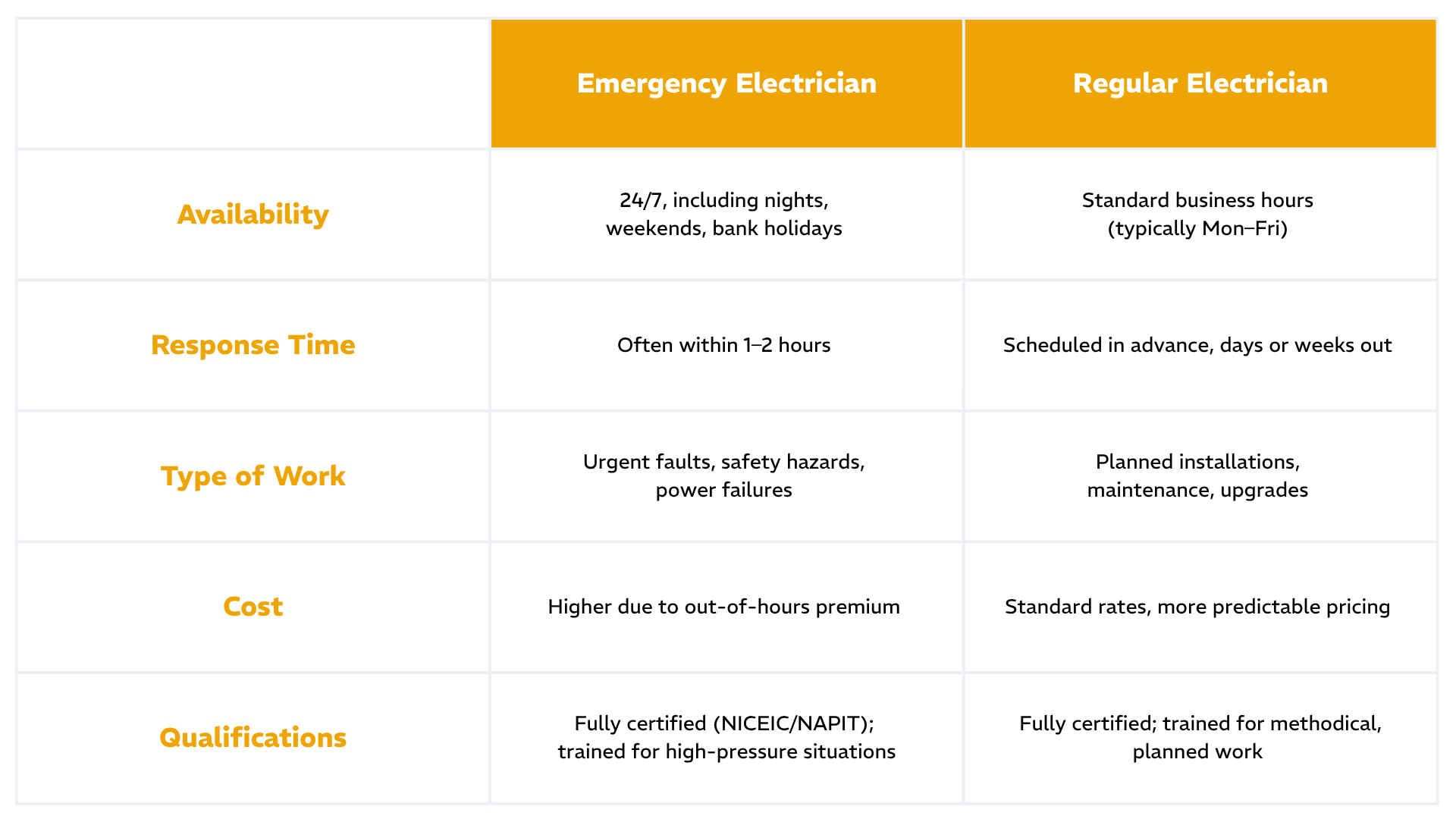
When Do You Need an Emergency Electrician?
Electrical emergencies can escalate quickly. According to Electrical Safety First, electrical faults are responsible for over half of all accidental house fires in the UK — around 19,300 fires of electrical origin occur across the country every year. Faulty electrical equipment and sockets cause approximately 70 deaths and 350,000 injuries in UK homes annually.
That's why it's so important to know when to act — and to act fast.
Call an emergency electrician immediately if you experience:
Burning smells or scorch marks A burning odour coming from a socket, appliance, or your consumer unit is a serious warning sign. Warm or discoloured sockets suggest overheating inside the wall — potentially caused by overloaded circuits, loose terminals, or degraded wiring. Don't wait and see.
Sparking sockets or outlets Visible sparks are never normal. They indicate a potentially dangerous fault that could ignite surrounding materials and start a fire.
Electrical fire or evidence of fire If you can see scorch marks, smell burning, or suspect an electrical fire has occurred — even if it appears to have self-extinguished — call an emergency electrician immediately. Do not attempt to use the circuit until it has been assessed.
Complete loss of power A sudden power outage that affects only your property (while neighbours still have power) usually points to a fault within your consumer unit, internal wiring, or the incoming mains supply. An emergency electrician can diagnose whether the issue is with your circuit breakers, distribution board, or wiring — and get you back up and running.
Tripping circuit breakers that won't reset If your circuit breaker trips repeatedly or simply refuses to reset, this could indicate a short circuit, circuit overload, or an insulation fault. Persistent tripping is a sign that something is wrong and should not be ignored.
Exposed or damaged wiring Any situation where live wires are visible or accessible poses a risk of electrocution. This includes wiring that has been accidentally damaged — for example, drilling through a hidden cable.
Electric shocks from appliances or sockets Even a mild shock when touching a socket or appliance suggests a grounding or bonding fault. The protective earth circuit may be compromised, significantly increasing the risk of serious electric shock.
Water damage near electrical systems If your property has experienced flooding, a burst pipe, or a significant leak near electrical fittings, do not restore power without having an electrician inspect the installation first.
Loss of power to critical systems Not all power loss is life-threatening, but some is functionally urgent. No power to a medical device, sump pump ahead of a storm, refrigerator full of perishables, or your entire heating system during winter can all justify an emergency call-out.
When Can You Wait and Book a Regular Electrician?
Not every electrical issue demands an emergency response. Some problems are frustrating or inconvenient but don't represent an immediate danger to life or property. These can usually be scheduled with a regular electrician during normal working hours.
Consider booking a standard appointment for:
Installing new sockets, light fittings, or appliances
Upgrading or replacing your consumer unit (fuse box) as a planned improvement
Fitting a new electric shower or EV charging point
Having an Electrical Installation Condition Report (EICR) carried out — recommended every 10 years for homeowners and every 5 years (or change of tenancy) for landlords
Occasional flickering lights where there's no burning smell, scorch marks, or sparking
A single socket that has stopped working, with no other symptoms
Rewiring work as part of a renovation or home improvement project
Energy efficiency upgrades such as smart controls or LED systems
If in doubt, give Emergency Hero a call. One of our team can help you assess whether your situation needs an emergency response or if a scheduled visit will do just fine.

What Do Emergency Electricians Cost in the UK?
The honest answer: emergency electricians cost more than their regular counterparts — and that's to be expected. They're available around the clock, they need to drop everything to attend, and their rapid response prevents what could become a much more expensive problem.
Here's a rough guide to UK pricing in 2025:
Standard electrician rates: Hourly rates average around £45–£60 across the UK, rising to around £90–£200 per hour in London.
Emergency electrician rates: Expect to pay £80–£110 per hour for out-of-hours emergency call-outs. Evening, weekend, and bank holiday callouts typically cost more.
Call-out fees: Many electricians charge a flat call-out fee on top of their hourly rate. Standard fees range from £30–£100; emergency call-out fees typically start from £100 and can go higher depending on time of day and location.
Out-of-hours premium: Emergency and out-of-hours work generally costs 25–50% more than standard rates.
While the cost feels significant in the moment, the alternative — ignoring a fault and risking a house fire, an insurance void, or a more serious repair — is nearly always more expensive. Insurance companies can also refuse claims arising from electrical faults if you have failed to maintain your electrical systems, so acting promptly is sound financial sense, not just a safety decision.
How to Choose the Right Electrician
Whether it's an emergency or a planned job, always make sure your electrician is properly qualified. In the UK, look for:
NICEIC or NAPIT registration — these are the leading government-approved competent person schemes for electrical work. Registration means the electrician is regularly assessed and meets current safety standards.
ELECSA or similar scheme membership — also recognised under the UK's competent person framework.
Part P compliance — most domestic electrical work must comply with Part P of the Building Regulations. Only certified individuals should carry out notifiable work such as consumer unit changes or circuit alterations.
Public liability insurance — protects both you and the electrician if anything goes wrong.
Never attempt to carry out electrical work yourself unless you are qualified to do so. DIY electrical repairs are unsafe, may breach Building Regulations, and are typically not covered by home insurance. External parties like Emergency Hero ensure that all their emergency electricians are fully vetted and qualified, so you don’t have to worry.
Why Choose Emergency Hero?
At Emergency Hero, we're not a big corporate. We work with a trusted network of friendly, local, fully vetted electricians who live and work in your community. We're on hand 24/7 to match you with the right professional fast — and we send you a quote by text before any work begins, so there are no nasty surprises.
87% of call-outs attended within 90 minutes
Fully qualified electricians
Available 24/7, 365 days a year
Transparent pricing — quote sent by SMS before work starts
Trusted by thousands of UK homeowners
Got an electrical emergency right now? Don't wait — Find Your Hero and get a local electrician on their way today.
Frequently Asked Questions
Is it always obvious when I need an emergency electrician? Not always. If you're unsure, err on the side of caution — call us and describe the situation. We can advise you quickly on whether it's urgent.
Can I turn off my power at the mains if I'm worried? Yes. If you're concerned about an immediate risk, switching off at the consumer unit (fuse box) is a sensible precaution while you wait for a professional. Never touch wiring or attempt a repair yourself.
Does my home insurance cover electrical emergencies? This depends on your policy. Many policies require that you maintain your electrical systems properly. Failure to act on warning signs, or carrying out DIY electrical work, can invalidate a claim. Regular EICRs and prompt repairs help protect your cover.
How often should I have my electrics inspected? Electrical Safety First recommends an EICR every 10 years for owner-occupied properties. For rented properties, landlords are legally required to ensure an EICR is carried out every 5 years, or between tenancies.
What should I do if I smell burning from a socket? Switch off the circuit at the consumer unit if it is safe to do so. Do not use the socket. Call an emergency electrician. Do not attempt to investigate the socket yourself.