
Emergency Plumber vs Regular Plumber: What's the Difference and When Do You Need One?
Water can cause more damage to a home in a shorter amount of time than almost any other domestic emergency. A burst pipe left unchecked can release hundreds of litres in minutes. A hidden leak left undetected for days can rot floorboards, destroy plasterwork, and cost thousands to put right. And yet many homeowners aren't sure whether to call an emergency plumber right now, or just book someone in for next week.
Getting that call right can be the difference between a manageable repair and a major, costly disaster. This guide explains exactly what separates an emergency plumber from a regular one, when each is needed, and what you can expect to pay.
What Is an Emergency Plumber?
An emergency plumber is a fully qualified professional available 24 hours a day, 7 days a week — including weekends, bank holidays, and the middle of the night. They specialise in responding fast to plumbing crises that pose an immediate risk to your property, health, or daily life. Their job is to stop the damage, make the situation safe, and get things working again as quickly as possible.
Speed is everything in a plumbing emergency. The faster the response, the less damage — and that directly affects how much you'll ultimately spend putting things right.
At Emergency Hero, we connect you with vetted, local emergency plumbers across the UK, with 87% of call-outs attended within 90 minutes — any time, day or night.
What Is a Regular Plumber?
A regular plumber handles planned, non-urgent plumbing work during normal business hours. They carry out installations, routine maintenance, minor repairs, and upgrades — jobs that can be scheduled in advance without any risk to your property in the meantime. Regular plumbers typically work Monday to Friday and will book you in a few days ahead.
Think of a regular plumber as the professional you want for planned improvements and routine upkeep — the jobs that, if they waited a week, wouldn't make anything worse.
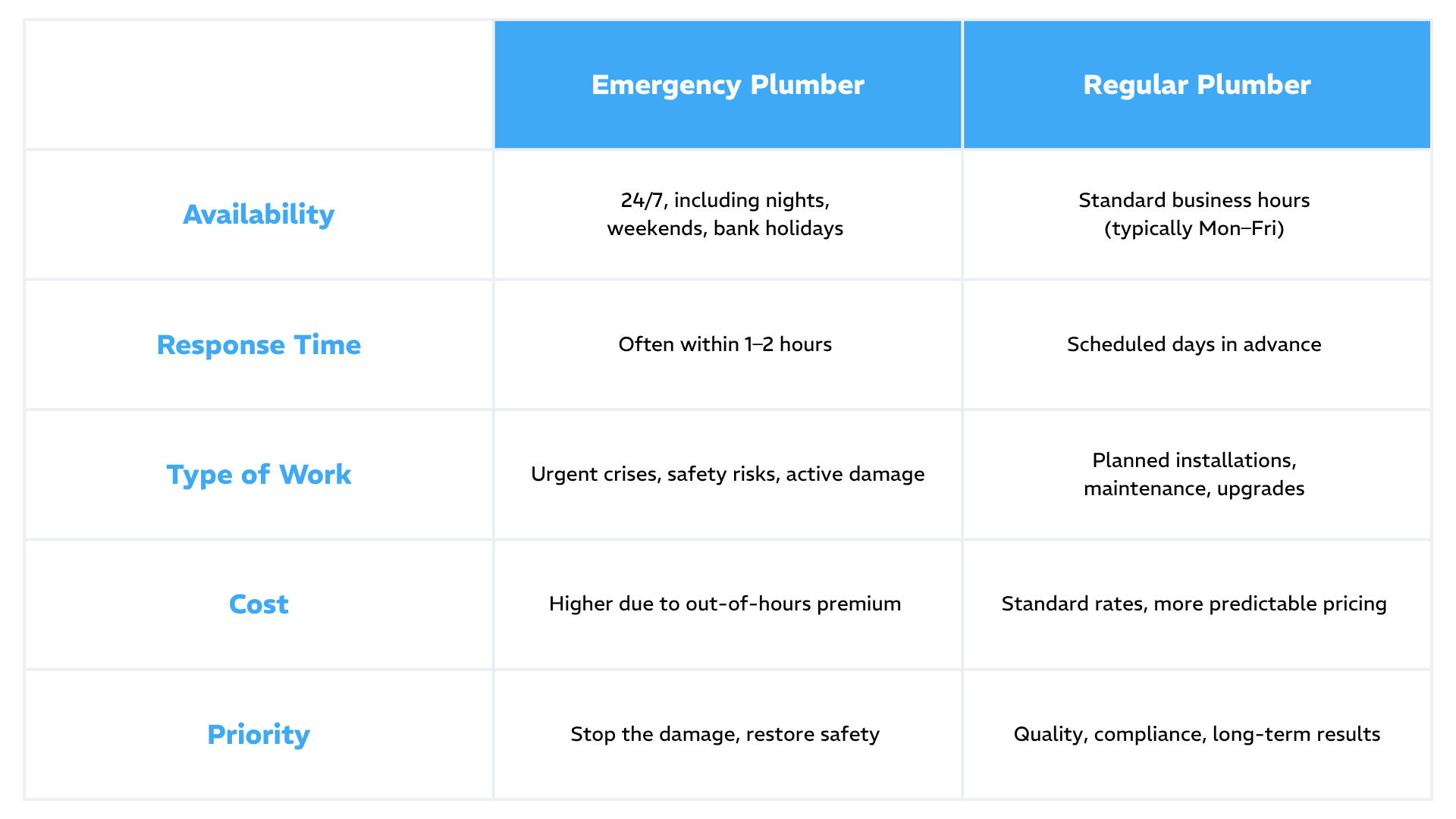
The Key Differences at a Glance
When Do You Need an Emergency Plumber?
Studies show that water damage from plumbing emergencies costs UK homeowners an average of £7,000 per incident. Acting quickly — not waiting until morning — is what keeps that figure from climbing.
Call an emergency plumber immediately if you experience:
A burst pipe A burst pipe is one of the most urgent plumbing emergencies you can face. Water can flood a room in minutes, seep into floors and walls, and cause structural damage that takes weeks to dry out and months to repair fully. The moment you spot signs of a burst — a wet patch spreading rapidly, water coming through a ceiling, or a sudden hissing sound — turn off your main stopcock and call an emergency plumber immediately.
Water leaking through the ceiling If water is actively coming through a ceiling, the structure above is saturated. There is a very real risk of ceiling collapse if this is not addressed promptly, and the longer it's left, the more extensive the repair work becomes.
Frozen pipes During cold snaps, the water inside pipes can freeze and expand, causing cracks or full bursts. If you suspect frozen pipes — taps running dry, radiators cold in a specific area — call an emergency plumber before the thaw causes a rupture.
Sewage backing up into sinks or toilets Sewage backing up into your home is both a health emergency and a structural risk. It usually signals a serious blockage or collapse in the sewer line. This is not a situation to manage with a plunger and patience — it needs professional attention immediately.
A major or uncontrolled leak Not all leaks are equal. A dripping tap can wait. A leak that is actively spraying water, soaking into walls, or spreading across flooring cannot. If you can't contain it with a bucket and towels — or you can't locate the source — it's time to call.
No water supply at all A complete loss of water, especially if it only affects your property, can indicate a fault with your internal supply pipe or stop valve. In practical terms, no water means no toilet flushing, no drinking water, no cooking. It qualifies as an emergency.
Boiler leak or water heater leak A leak from the boiler or water heater should always be treated as urgent. Beyond the risk of water damage, a leaking boiler may also indicate a gas or pressure fault — which takes this into gas safety territory too. Turn off the water supply and call immediately.
Flooding — from any source Whether caused by a plumbing failure or an external event, flooding near electrical systems is especially dangerous. Do not restore power to an affected area until a professional has assessed it.
When Can You Wait and Book a Regular Plumber?
Some plumbing problems are frustrating but not dangerous. The test is simple: is water actively damaging your property right now, or is there a health or safety risk? If neither applies, you can usually afford to book in with a regular plumber during working hours.
Consider a standard appointment for:
Installing a new bathroom, shower, bath, or basin
Replacing or upgrading a kitchen sink or tap
Fixing a slow-draining sink when it's not backed up
Fitting a new toilet (without an immediate overflow problem)
Minor, contained drips from taps or valves — where a bucket holds the water
Replacing or repositioning radiators as part of a home improvement
Installing an outside tap or garden water supply
A single clogged toilet, if you have another bathroom available
A useful rule of thumb: if you can contain the situation safely until tomorrow morning, it's probably not an emergency. If you're not sure — call us and describe what's happening. We'll tell you straight.
What Does an Emergency Plumber Cost in the UK?
Emergency plumbers cost more than regular ones — and it's worth understanding why. They're on call around the clock, they have to travel at any hour, and fast action on their part genuinely prevents much more costly damage to your home.
Here's a realistic guide to UK costs in 2025:
Standard plumber hourly rate: Typically £40–£60 per hour across the UK (higher in London and the South East).
Emergency plumber hourly rate: Expect to pay around £110–£120 per hour for emergency call-outs. Evening, weekend, and bank holiday calls attract further premiums.
Emergency call-out fee: Typically £100–£120 on top of hourly labour. In London, these fees tend to be higher.
It's important to see emergency plumbing costs in context. The average water damage claim from a plumbing failure is around £7,000. Spending £100–£400 to stop a burst pipe within the hour is vastly cheaper than leaving water to spread through flooring, walls, and ceilings overnight.
What to Do While You Wait for an Emergency Plumber
There are a few steps you can take to limit damage while help is on the way:
Turn off the main stopcock — usually found under the kitchen sink or where the water supply enters the property. This stops the flow of water immediately.
Turn off the boiler and water heater — prevents pressure build-up and further damage.
Move furniture, electronics, and valuables away from affected areas.
Take photos — for insurance purposes, document the damage before any remediation begins.
If water has reached any electrical fittings, switches, or consumer units, do not touch them and do not restore power to the property until it has been checked.
How to Choose the Right Plumber
Whether it's an emergency or a planned job, always verify your plumber's credentials:
For gas-related work — any plumber working on gas appliances (boilers, gas supplies) must be Gas Safe registered. This is a legal requirement, not a recommendation.
Public liability insurance — protects both you and the plumber if anything goes wrong on the job.
Beware unverified online listings — always ask for credentials and check them before allowing access to your property.
Why Choose Emergency Hero?
We're not a big corporate. We work with trusted, local, fully vetted plumbers across the UK — professionals who know their areas and care about the people they work for. We're available 24/7, we send your quote by text before any work begins, and we're on hand to help you figure out whether your situation is a true emergency or one that can wait.
87% of call-outs attended within 90 minutes
Fully qualified, vetted local plumbers
Available 24/7, 365 days a year
Transparent pricing — quote by SMS before work starts
Trusted by thousands of UK homeowners
Got a plumbing emergency right now? Don't wait — Find Your Hero and we'll have someone with you fast.
Frequently Asked Questions
Where is my stopcock? Most properties have the main stopcock under the kitchen sink or near where the water supply enters the building. If you can't find it, your water meter will often be located outside — and the supply can be turned off there. Find yours before you need it.
Can I turn off just one section of the water supply? Yes — individual isolation valves are usually fitted under sinks, behind toilets, and near other fixtures. Turning these clockwise will isolate that fitting. If you can't find the individual valve, the main stopcock is your fallback.
Is a blocked drain an emergency? It depends. A slow drain is usually not urgent. A drain that is backing up into your home, causing flooding, or creating a sewage smell throughout the property is an emergency.
Does home insurance cover emergency plumbing? Many policies include some level of emergency plumbing cover, but terms vary significantly. Check your policy and act quickly — insurers may require evidence that you responded promptly to limit damage.
What if I can't find the source of a leak? Call an emergency plumber. A slow, hidden leak — behind a wall, under flooring, or inside a void — can cause extensive damage long before it becomes visible. Don't wait for a wet patch to tell you where it is.